
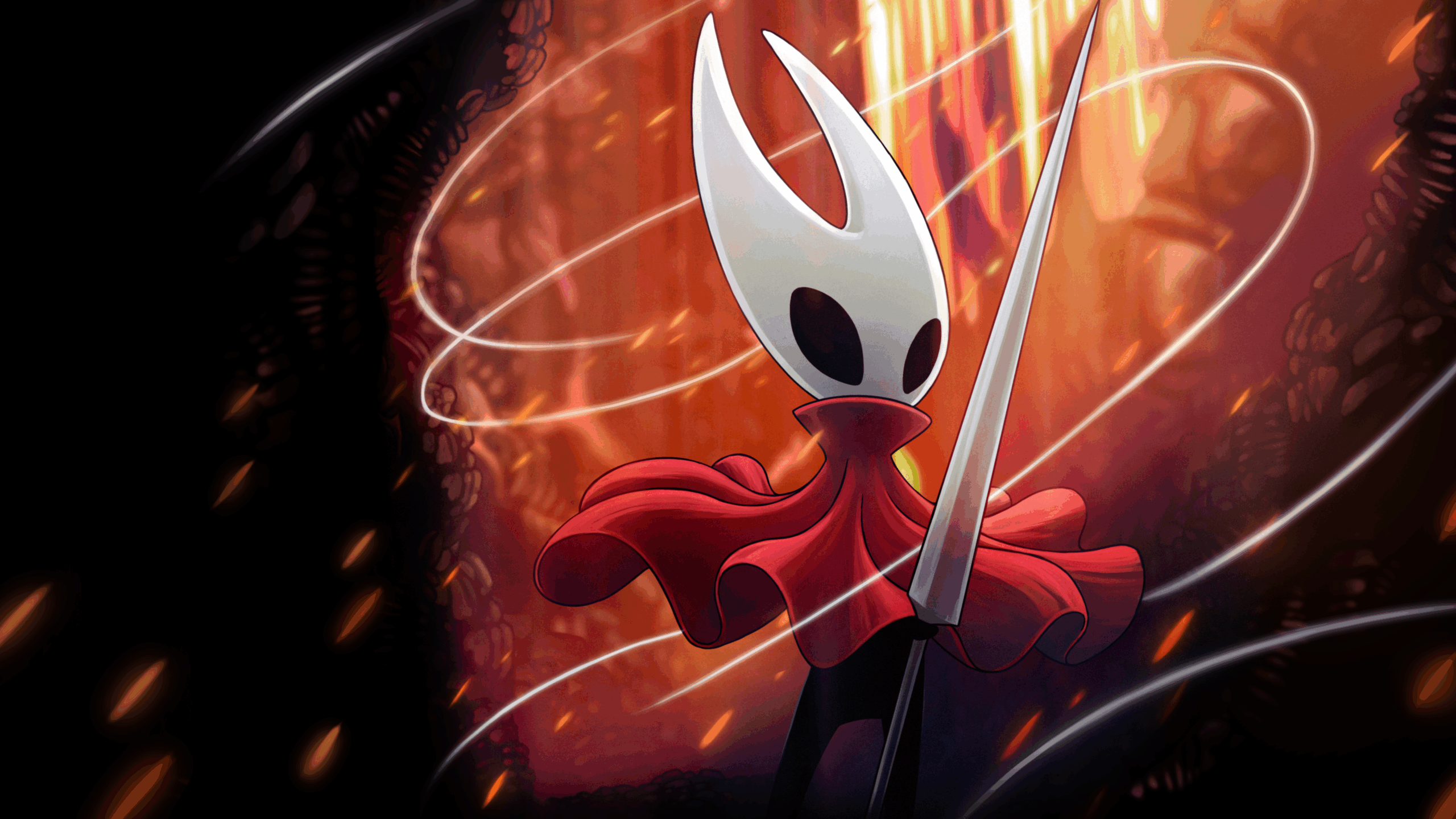
A response to Grace Benfell’s Endless Mode piece, “Silksong Hastens the Death of the Critic”
Last week the long-awaited sequel to Team Cherry’s hit search-action game Hollow Knight, Silksong, released to much popular acclaim—and no full day-of reviews by mainstream video game criticism outlets. This was by-design; two weeks prior to launch, Team Cherry announced that it would not be providing codes to outlets, because “it would be unfair for critics to be playing before Kickstarter backers and other players,” according to Bloomberg’s Jason Schreier. This immediately spun up discourse: was it an alarming sign that games studios and publishers were finally ready to discard the games press once and for all like one of Andy’s grown-out-of toys in Toy Story? Or was this a nice reprieve for the legion of freelance games critics who wouldn’t have to spend the ten or so days before Silksong’s launch (especially with both Gamescom and PAX West happening at the same time) trying to crunch through and write coherently about the lengthy title?
Silksong‘s Thursday launch did see three so-called “reviews-in-progress” get published, at Nintendo Life, GameInformer and IGN. In all three instances, the authors promised to flesh out their thoughts on the game over time, but also provided their surface-level first impressions of the game and some context for readers regarding the last several years of Silksong‘s development and pressurized fan hype. Since Thursday, Eurogamer, GameGrin and GamesRadar+ have followed suit.
Also published at Silksong‘s launch was Grace Benfell’s article at Endless Mode, which this post is a response to. In the piece, she argues that Team Cherry’s decision to keep critics from early access codes “represents a deterioration of criticism as a profession, an art, and as a service to the audience.” Benfell is a tremendous critic with incredible insight and knowledge about games criticism as a space where people work, but in this instance I disagree with her conclusions; I think she’s wrong.
Let’s start with the obvious: writing about media and culture in a critical light is not currently in favor, to put things lightly. Major news outlets are letting their longtime movie and theater critics go; arts sections are being cut; “priorities are being realigned.” Games media in particular has been in a sustained moment of upheaval extending from the very tip top of outlets like IGN on down through the small indie sites that run on a few bucks and a prayer. New subscriber-supported, paywalled outlets are forming in their place every day, and while this is hopefully great news and a relief for the writers these sites sustain, these outlets’ walled-off nature means less free public access to the result of their work—their criticism, in other words.
The ad model no longer works; SEO got fucked up by one of Google’s inscrutable updates; social media has so thoroughly balkanized that it’s impossible to know which hot garbage website you need to sign up for in order to “build up a following;” everybody’s kind of feeling around in the dark for answers and all we’re pulling up are more questions, more uncertainty.
As Benfell acknowledges, these very systemic issues are not Team Cherry’s fault. But, she says, that doesn’t let them off the hook; if anything, their actions might make games media more vulnerable, because it contravenes a long-held industry standard.
“If Ubisoft or Sony dodged launch reviews that would be suspicious,” she writes. “Bethesda and Xbox only (halfway) got away with it with Starfield because they gave codes to most outlets.”
“However well-intentioned, Team Cherry’s decision would be the preferred model of every executive,” she continues. “Let us move product directly to the consumer, without the pesky interference of critics who might muck things up with their opinions.”
And she’s right: it’s only due to the fact that it’s the way things have always been done that studios and publishers and PR firms send review codes to outlets before launch, and it is suspicious when a studio decides not to do that, or when they do so with very little time before launch. But what Benfell doesn’t talk about here is that these early codes often come with restrictive agreements not to discuss certain aspects of the game, usually narrative spoilers, sometimes mechanical ones. It’s tit for tat, skewed in the studios’ favor. And because outlets must agree to these embargo terms or else lose out on release-day coverage traffic, this necessarily constrains what critics are even allowed to write about, forcing them to contort their pesky opinions into something more palatable (or at the very least, benign) for the studio, publisher or PR firm.
Further, I think it’s important to not overstate things: I don’t think other game studios or publishers are looking at Team Cherry and going, “Oh, we could do that!” At least, they’re not just suddenly coming to the conclusion that critics are useless to them this week, of all weeks. This is another thing that has been a long time coming, with the rise of influencers and streamers who garner large followings through let’s plays or low-effort reaction content over roughly the last decade, and the amenability many publishers and studios have shown to working with them.
From here the piece turns introspective. “It is easy to think of criticism as an insular practice, one focused on the subjective opinions of a specialized few,” she writes. “But beyond cultural pressures and elite institutions, a review is a conversation. There is a shared thing between the critic and the reader, an experience had or yet to be had, that the critic is trying to build a bridge to.”
Again, I don’t really disagree with this part, but I do have to ask: does that conversation have to take place right when a piece of media comes out? Is that conversation even actually happening that early on? And is it the studio or author or publisher’s responsibility to ensure that it does?
By nature of our calling, critics are inextricably linked to the art we’re critiquing in at least one relational sense; without the art, there would be nothing to critique. But beyond that fact of our existence it feels strange that we should be beholden to the capitalist forces that produce some of the art we appraise, just because by letting them have that control we get a little bit closer to both the art and its—and our—audience. It’s like we’re all jockeying to be tour guides at the world’s most extractive museum for a day rate of less than $100. And, ironically, the more control we give those forces the easier it is for them to destroy us, if they wanted to.
Beyond the realm of mainstream games media sites (and most of the smaller content mills) there exists a vast and fairly deep pool of writers and critics who do this shit for the love of the game. They aren’t “part of the industry” because there is nothing industrial about how they work. The criticism they produce isn’t contingent on release dates and audience retention metrics and they’re not on PR teams’ email lists to begin with. They sign no embargoes and agree to no content restrictions, and they take their time to think about the media they’re examining—far more time than any outlet would ever agree to give a freelancer. If their eventual post goes viral at all it’s because it was picked up by chance by something like Critical Distance; more often than not, handfuls of people ever see it, and usually those that do are the author’s friends and people they know. The conversation that happens with these posts out in the wilderness isn’t between a critic and their captive audience but between friends, peers, rivals and even enemies. Minds get changed, lines get drawn, ideas are spun up and shot down, and the discourse wheel spins in more interesting ways than the regurgitory merry-go-round we’re often subjected to in and around mainstream criticism. These people are not merely enthusiasts, feckless nerds born with an all-encompassing desire to Consume Product; they are indeed actual critics, engaging with works in a myriad of specialized ways that complicate and clarify them in exactly the way Benfell describes, but without the notoriety of Being A Critic In The Public Sphere.
This isn’t to say that no good criticism gets done in the mainstream, there are of course incredible writers all over the space in spite of the present moment; but we could do to take a page or two out of games media’s outskirts’ book. Because if games criticism is going to die, it’s going to be the people out in the wilderness who rebuild it.
What might that page-taking look like? Well, maybe it looks like a turn away from the embargo system, a refusal on the part of outlets and critics to engage with games given to them early for free. Maybe it looks like longer deadlines, a commitment to less crunch imposed on freelancers or staffers, or an increase in pay (and overtime for salaried workers!) if crunch must happen. Maybe it looks like conversations between writers at a given outlet, or between outlets. Waiting, moving slowly, collaborating, not being the first with a take, no longer participating in quid pro quo; these are all avenues available to mainstream critics and the outlets that still employ them—if they’re willing to take that kind of risk. The death—and life—of games criticism is a labor issue, and it’s one that must be addressed by games media, not the studios and publishers it covers.
As far as Silksong is concerned, it’s going to have a long popular—and critical—tail. People are going to want to know how others felt about it, and they’re going to engage in that conversation, and critics of all sorts will be engaged in it, for weeks and months to come. Just because it’s not happening this weekend doesn’t mean games media writ large is doomed, even if every other piece of news about the state of media does.
2 responses to “Games Criticism is Dead; Long Live Games Criticism”
“Beyond the realm of mainstream games media sites (and most of the smaller content mills) there exists a vast and fairly deep pool of writers and critics who do this shit for the love of the game.”
An enjoyable article but I would like to push back at this assertion, which is true in the purest sense – yes, there are a lot of lesser-known critics writing about games out of sheer love – but they exist *inside the realm of mainstream media* as well. When I worked in games media, I didn’t know a single person who didn’t do it because they loved it, and we all suffered from paycheck-to-paycheck salaries that barely kept us afloat in expensive cities. (All of them began as unpayed critics that found roles at various outlets.) The deep pool includes mainstream publications, and while I understand the point, that gulf you imagine between employed critics (of which there aren’t many nowadays) and those who do it ‘for the love of the game’, as they say, is more of a tiny woodland stream. The people in the wilderness *includes* the professional writers; it’s disappointing to see you downplay their worth in an article that argues for the worth of the ‘outsider’ critics.
I agree with many of your points – criticism isn’t dying. But having been in games in multiple roles for over 20 years, I don’t think the divide is as great as you think; these same points have been at the center of discussions at publications for some time now, and we’ve understood in that time that we would be entering a world without pre-release reviews sooner than later.
[…] a big online discourse about literary criticism, a surprisingly much calmer discourse about games criticism, a long piece about music criticism in the New Yorker, and they all cite similar happenings – […]