
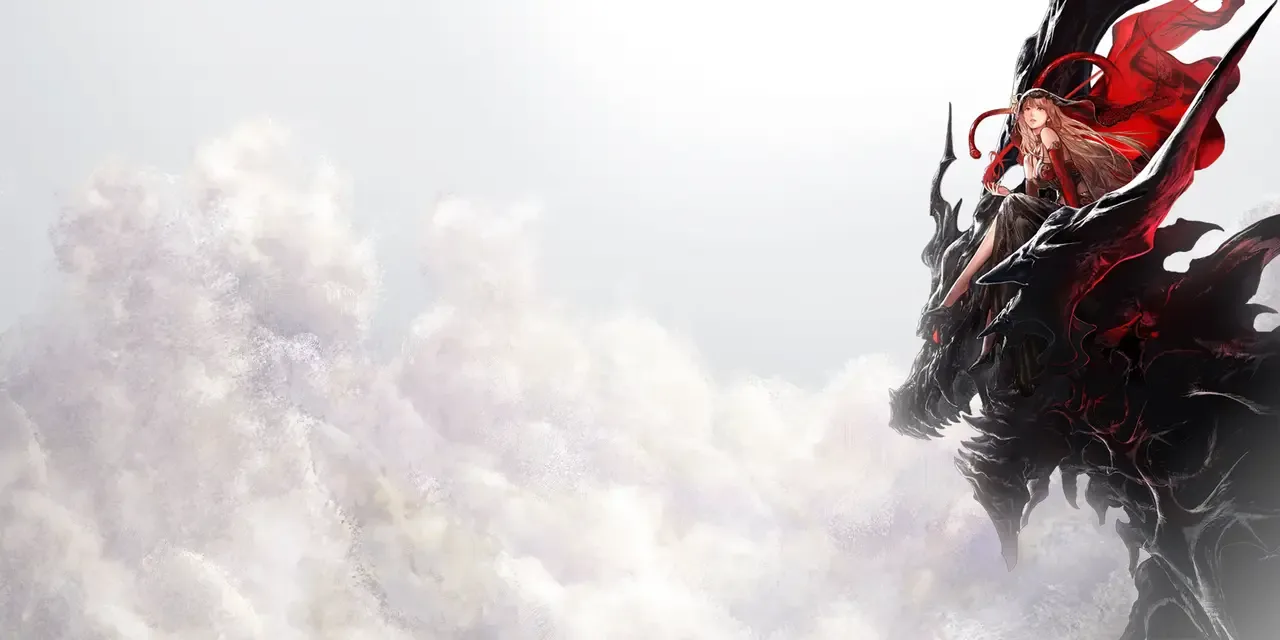
Final Fantasy: Brave Exvius sat on my phone for about six years and I don’t think I ever once opened it. This is a pretty common fate for most of the RPG-shaped gacha games I’ve downloaded; at best I opened them once, played them for about 15 minutes, and then never went into them again. And then, like many RPG-shaped gacha games of the mobile variety, Final Fantasy: Brave Exvius was put out to pasture. Its final day of existence was October 30, 2024 out in the rest of the world and October 31, 2025 in Japan. Now, gacha aspects aside, I think I have a decent reason for my bad mobile game download habits, which is simply: I don’t actually like playing games on my phone.
If I don’t have to, if I can avoid it (like even if that means just playing the iPad version of something), I will play video games on anything but my phone. I just don’t enjoy it, irrespective of a game’s quality (once Apple Arcade really got up and running I played a lot of the better titles on that service on iPad or Mac). And that’s how and why Brave Exvius joined its sequel, War of the Visions, and many other Square-Enix-published mobile games, in disuse on my device (and eventually global discontinuation). It happened with that Nier game, too. When I think about this objectively, that is, divorced from my own predilections, I can acknowledge that this means I’ve let many probably-pretty-good games and stories essentially rot on the vine.
Luckily for this back catalogue of games I studiously ignored for years, new life may be possible, and it’s all thanks to the work of “Team Asano,” also known as Square-Enix’s Creative Studio 5, led by executive producer Tomoya Asano. CS5 is responsible, along with a whole host of third-party development teams, for games like Bravely Default, Triangle Strategy, Octopath Traveler and the 2026 action-adventure game The Adventures of Elliot: The Millennium Tales. Additionally, CS5 has been the steward of the recent Dragon Quest remakes, Live-A-Live and the locked-door mystery shooter Killer Inn. Maybe most notably, they’re responsible for the so-called HD-2D visual style, combining pixel graphics with 3D environments. Last year, CS5, together with Doki Doki Groove Works, released Octopath Traveler 0, the static and monetization-free version of the mobile Octopath Traveler: Champions of the Continent. And this year, next month in fact, they’ll be releasing Final Fantasy Resonance, the “first HD-2D Final Fantasy” that remakes and expands on the first year’s worth of story from Brave Exvius. Would the game’s gorgeous hybrid graphics, full voice-acting and new spin on turn-based combat be enough to get me to right the wrong of my ignorance, or should I leave this game on the shelf of my backlog, forever to be forgotten?
A New (Old) Story of the Crystals
The first thing I noticed about Final Fantasy Resonance was of course its marketing. In its announcement trailer, Resonance is billed as the “First Final Fantasy in HD-2D!” By itself I don’t think this actually means all that much, because HD-2D is a term that Square has trademarked; it helps us understand what Square thinks of this game about as well as if Valve described Half-Life 2 as “the first game of ours on the Source Engine!” We may glean the aesthetic but not necessarily pick up on its importance from this alone. What I find more interesting than that is the claim this trailer makes after: that Resonance “returns to [the series’] roots, with cinematic pixel art in a classic tale of crystals with a new twist.”
This is telling us something fascinating. It’s situating Resonance as a sort of retroactive inflection point, an alternate path the Final Fantasy series could have taken after FFVI instead of jumping into 3D territory. This is confirmed by the marketing again in a “pixel” trailer that came out about a month ago, straight-up asking the question: “What if Final Fantasy had continued to push the limits of pixel art?” Even more interesting, the trailer ends with the declaration that “A new age of pixel art starts here!” Does this put Resonance at the head of a new direction for the mainline Final Fantasy series? After so many years of the series pushing the boundaries of graphical fidelity and 3D verisimilitude, as well as experimenting with all sorts of combat to variable degrees of success, will Final Fantasy XVII perhaps be an HD-2D, turn-based adventure? That is certainly the vibe I’m getting from these trailers, and I almost wonder if Square-Enix is simply waiting to see if this game sells well and performs well critically. Needless to say, the expectations placed on Resonance and the teams working on it seem astronomically high to me.
So: there’s a demo. Everybody can play it right now on the system of their choice. It’s on all the storefronts, including both Nintendo Switch and Switch 2. I played on PC. If you don’t take your time and grind, you can finish the demo in about four hours; I finished in about 5. The demo caps everything out, you stop gaining EXP at about level 15, and your visions – more on those later – cap out at level 5 for each party member. Once you get on the boat at the end of chapter 1, the game lets you save and you’ll be able to carry that save data over to the next game, should you decide to buy it. It’s a pretty generous situation and I imagine you could probably milk out a few more hours of just wandering around the first little archipelago of landmasses you’re on. I’m sure some folks are gonna minmax their party going into the actual game when it comes out at the end of October.

The experience I had playing this demo was… interesting, to say the least. The first 20 minutes or so is jammed full of visual and textual spectacle. The opening cinematic by itself is like nothing I’ve experienced. I was honestly shocked by how different it felt from a typical HD-2D game. The art style seemed to shift in real time between pixels, cartoon animation, stop-motion, full 3D CGI and even live action on a whim, and between frames. When we finally gain control of the game, playing as someone called the Archwitch, this effect doesn’t really go away; the environment is almost fully 3D, while things like fire effects, enemy units and the Archwitch herself are pixel sprites. But… there’s a weight to them that’s been absent from other HD-2D games thus far. Do you know what I’m talking about? How previously, HD-2D character sprites seemed to be in the world, but not of it? Like a… weird puppet show? Here in Resonance they feel fully integrated, and I think the reason why is that they’re more detailed. They look like people, not tiny paper dolls scooting across the 3D landscape. I think this effect is further accentuated by the fully-illustrated character busts that accompany dialogue boxes.
I think what I’m trying to get at is that, even though we’re talking about a relatively much more economical graphical art style for a video game than the fully-rendered Borgesian imperial cartography of something like Final Fantasy VII Rebirth, CS5 and third-party studio Lancarse still want everything we see to look expensive, or rather, like they spared no expense. Surprises further abound when we discover that the game is fully voice-acted, and that there are actual cinematic cutscenes throughout the game, in addition to the one at the beginning, and on top of the expected back-and-forth character banter. I played the game with English voice acting and thought everyone was doing a really good job, from Clifford Chapin (who voices main character Rain) to Alejandro Saab (Lasswell) to Lizzie Freeman (Fina) and everyone else whose credits we have to wait for the full release to see. I imagine the Japanese voice acting is equally as good, if not better, but the point is: even from the first 20 minutes I could tell that this was an extremely solid production, all around.
I had to keep reminding myself that this was an adaptation of a mobile gacha game from ten years ago. One I ignored for years. My astonishment was absolute.
Just Like You Like It
Once I finished picking my jaw up off the floor and reined in my fuzzy feelings about the production quality, I still had to play the video game. And I think once the game is done (for now) throwing all the spectacle it can at you, the acts of traversing the world, moving through cities and dungeons, picking up side quests and talking to NPCs, and battling enemies all end up feeling rather… normal, by comparison. Sprite movement is brisk. Unvoiced conversations occasionally occur and feel about as standard as they can get. Your minimap will ping you when you get close to your next random encounter (which honestly makes it feel less random but that’s a minor complaint). And you can get through most low-level enemy battles by just mashing attack and letting your party do their thing, as you can in most early-era Final Fantasy games. Rain and Lasswell are amiable companions and have good dialogue; the writing has been punched up significantly since Brave Exvius (I watched several YouTube videos of that game’s campaign to check), and I think this game does a better job of introducing everyone in the Kingdom of Grandshelt and their relationships to each other than the mobile game did. But – and this might be damning it with faint praise before it even has a chance to properly release – a lot of this still manages to feel quite like a typical Octopath or Bravely entry.
Once you get access to Visions, however, the combat deepens significantly, and the callback it makes to a specific Final Fantasy team composition system had me cackling for about 40 minutes the other night.
When Resonance was Brave Exvius, Visions were the gacha pulls. Apparently, in addition to being able to pull marquis Final Fantasy characters rated on a 1 to 7-star rarity scale, you could also get access to other Square-Enix franchises, like Tomb Raider, Secret of Mana and Kingdom Hearts. My understanding is that they’re not gonna go that crazy here, but if the series of smaller trailers Square-Enix has been putting out for Resonance is any indication, the stable of available Visions is still going to be quite hefty, with more than likely every mainline Final Fantasy entry covered. (A cursory look as of this writing shows us trailers for: Clive – FF16, Squall – FF8, Firion – FF2, Tidus – FF10, Y’shtola – FF14, Vaan – FF12, Bartz – FF5, Lightning – FF13, Onion Knight – FF3, Noctis – FF15, Shantotto – FF11, Cloud- FF7 and the Warrior of Light – FF1. We’re just missing someone from FF4, FF6, and FF9.) There will likely be even more than just these characters. In Brave Exvius, these characters were basically just used as special moves. What they’ve done to expand this – and the whole combat system – in Resonance is really, really neat. And they used Final Fantasy XIII to get there.
That’s right motherfuckers, the Paradigm system is back! No escape from Final Fantasy XIII! Each of the party characters and all of the Visions are given specific battle roles (stop me if they sound familiar): Sentinel, Commando, Breaker, Medic, Synergist and Saboteur. Additionally, both the permanent party members and the Visions each have their own combat commands. So, for example, Rain is a Sentinel and Lasswell is a Breaker. Early on we get two Visions for them, a White Mage (Medic) and a Black Mage (Breaker). Let’s say that Rain has a move that will allow him to attract and tank all damage for a full turn. If we attach the white mage to him, we can use his next turn to heal all the damage he took—essentially forcing attrition. If we attach the Black Mage to Lasswell, we can deepen Lasswell’s already robust set of moves that drain enemies’ stagger bar – that’s right baby we still fuckin staggering shit – allowing him to better account for enemy weaknesses and do the maximum amount of stagger damage possible. Now let’s say later on we get a new party member, Fina (Medic), and we get a Vision for her that has the Commando role. In addition to her innate abilities to heal and use holy magic, that Commando will give her DPS abilities.
That’s not all: as each party member deepens their bond with each Vision, they earn stat boosts and permanent additions to their own personal movesets that allow them to mix and match moves from different roles. And a visit to a certain Moogle in a certain coastal town will allow you to upgrade Visions’ skills even further. I was honestly surprised at how deep the combat ended up being just with the first like five or so Visions I could find and not even hitting the demo’s level cap. At one point I was able to earn a skill from leveling up the Vision bond with the White Mage that gave me a free HP regeneration with each turn; in another instance, when I leveled up with a Breaker Vision I earned a (rather devastating) automatic physical counter move. At its easiest the combat might just be button mashing, but some of the hardest enemies you face, which were on display in the demo, require careful preparation, consideration and strategizing. Just like in Final Fantasy XIII, being able to understand and utilize the role composition you have set up is paramount, and honestly I am absolutely fuckin stoked to see how it deepens over the course of the full 20-60 hour game, especially with the addition of shit like Espers.
Can Resonance Stand Alone, or Will An Identity Crisis Set In?

In a fit of pique I asked a silly question on Bluesky the other day: “Do we consider Final Fantasy Resonance to be a mainline game?” And like the obvious answer to this question, no matter how you slice it, is “no.” The next mainline Final Fantasy, whether it’s a fuckin massive production like the VII Remake series or an HD-2D game like Resonance, will be titled Final Fantasy XVII. At the very least, we know this to be the case. There is an unbroken line of numbered games stretching from the most recent entry in 2023 all the way back to 1987.
Resonance is – yes, already, it’s an easily-called shot – a really goddamn good adaptation of a mobile gacha game. What is not yet clear, and what I’m frankly a little concerned about, is whether or not it can withstand the pressure of being the acid test that determines what kind of games the next generation of actually-mainline Final Fantasy titles get to be. Will the lush cinematics that so easily awed me in the first few minutes end up tipping the scales into gauche territory? Will the voice acting I find to be so expertly subtle and natural-sounding now end up grating after 40 hours? Will the depth I’m expecting from the strategic paradigm-based combat fail to materialize? Will some tragic executive-mandated AI slop bullshit make its way into the game at the eleventh hour of development, cratering its chances of critical or commercial success entirely? Can Final Fantasy Resonance stand on the strength of its merits?
I want to hope that it will. Because the other thing that I really like about it, something I haven’t mentioned until now, is how unfailingly hopeful this game feels already. I’m fully aware that I have been captured by the emotional envelope the game wanted me to fall into, especially within its first hour. But of course I’m not just coming to this game as a reviewer; I’ve been playing all the most-modern Final Fantasy games basically nonstop for the last three or four years and I’ll tell you what, man: I’m fuckin so goddamn tired of grimdark. I am so over “what if we made Game of Thrones with Chocobos and you have to watch a Chocobo get stabbed in the neck in the first like two hours of the game and struggle to breathe.” Nah man! I just want to ride a goddamn Chocobo and listen to the fuckin jazzy jingle after all this time! That is what I want. And Resonance does at least let me do this basically right away, which I am very happy about. But yeah – I want to reverse course on the way these games have felt so bitter in recent years with recent entries. And I hope Resonance can point the way towards that better future.
One response to “First Impressions: Final Fantasy Resonance”
NGL given how Final Fantasy as a franchise tends to be an interesting amalgam of ideas from popular Fantasy/gaming Franchises. I’m half expecting FF XVII to be either a HD2D turn based take on the romantasy subgenre with cosy elements. Or a self aware meta dungeon crawler embracing some of the aspects of the Dungeon Crawler Carol books.