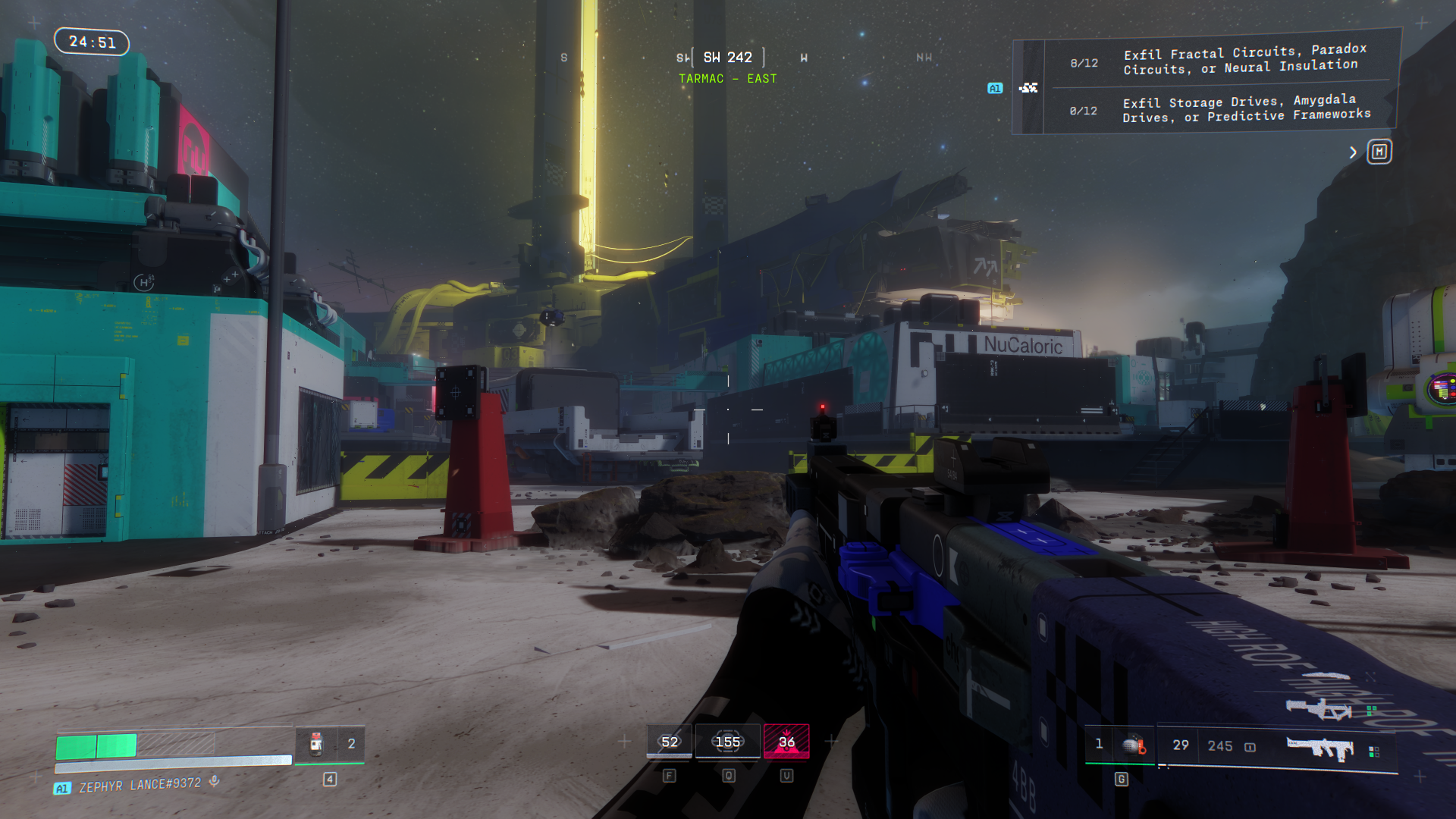
My relationship to live service games has been almost exclusively defined by Bungie.
Yes, I’ve played the other “classics” of the category, like Fortnite, PUBG, Apex Legends, The Finals and so on. But in those games I was a dilettante, a tourist, someone who popped in to see what all the fuss was about and, upon not getting it, left the scene immediately. I’m not a veteran of Overwatch or League of Legends or Valorant or CounterStrike, my only MMO has been Final Fantasy XIV, and I’ve never bothered with Call of Duty Warzone or Warzone 2.0 or whatever they slapped onto the Battlefield games.
The only live service game I reliably played for nearly a decade was Destiny 2. I was as hooked as someone could possibly be on that game, and it was pretty rough on me. From the Content Vaulting to the constant rubber-banding in quality of the things I cared about, to the never-ending carousel of buildcrafting that could genuinely remove more hours and days from your life more effectively than most mild neurotoxins, by the time I finally stopped playing Destiny 2 at what I thought was its logical conclusion, I was exhausted, bitter, wrung out. I became one of those people who follow shit like SteamDB player counts as if they were scrying bones thrown by an oracle whose only prophecy was doom and destruction. I subscribed to – and watched the videos from – innumerable creators whose only message was that Destiny 2 was cooked, fried, ready for death. Thank fuck I never got on the community reddit pages.
That said, when I think about Destiny 2 as a gestalt, my general feeling and critical opinion has always been that I like it. It is a good video game, albeit one that has been fundamentally ripped up and fucked around with in a way you rarely see with other games, and that is a hill I will die on. Destiny 2 was cooking at various points in its tumultuous timeline, and The Final Shape was a perfect endcap. I just couldn’t stick around for any more of it.
Marathon has always worried me. From the moment we found out it was an extraction shooter instead of, idk, a first-person, single-player, narrative-driven, corridor-heavy sci-fi horror experience—like the original Marathon games, or System Shock—my apprehension was high and my belief in the game’s success was low. Subsequent pieces of information, like the poor reception during the “closed” alpha or the art scandal, did not do much to raise my confidence. And to add onto that, there’s the ambient dread that lies on top of the entire games industry right now, with layoffs happening whether or not a game is good, or successful, or hits revenue targets, or maintains player count, or whatever. Fresh off witnessing the Concord debacle, to top it all off, it was very hard for me to look at Marathon and go “nah it’ll be fine.”
And then I played the server slam. And it was pretty good. I had a great time. I was still worried but significantly less so. I started to think, “maybe this is it. maybe this kind of game, a kind of game I’ve been burned by before, can be good.” And when I loaded into the game’s hyperaesthetic lobby for the first time during its actual launch, that feeling intensified.
Who are you in Marathon?
This is in some ways very easy to answer, and in others, more difficult. At the top layer, you are simply you, driving a disposable body around one of three maps in search of loot to extract and other players with better loot to eliminate. You are probably an at least somewhat skilled FPS player at baseline; while Marathon could be approached with the same slow methodical stealthiness that defined the Metal Gear Solid franchise, the chances of running into at least one critter, or UESC drone, or enemy player, are never zero and you need to either know how to click on heads or be at peace with regular swift eliminations.
You are also someone who needs a zen relationship with shit you accumulate inside video games. If you’re like me and your Destiny 2 vault has hit max capacity at some point in the past two years, this can be a very difficult paradigm to internalize. When you die in Marathon, and you will die, you will lose everything you carried with you onto the surface of Tau Ceti IV. The thing is, you kind of want to lose some stuff sometimes. You don’t have much vault space, and bigger shit requires more of it—a rule that applies to salvage and accessories as well as weaponry. At some point, whether it’s due to bad luck or a purposeful culling, you will eventually end up having to let shit go. But even if you practice perfect habits when it comes to vault management and never lose any run, the current “season” of Marathon we’re in will end. And when it does, all your shit is going away regardless, paid back to the corporation that owns your body as a debt repayment.
Speaking of which, there’s that second layer. You are a “Runner,” a human mercenary whose consciousness has been downloaded and saved to a giant data center on Earth or Mars, and you’re injected into a biosynthetic shell at near-light speed where you will spend up to 26 minutes on the surface of Tau Ceti before your body either dies prematurely (gunfire, critters, poison, fall damage), fails to exfiltrate by the time limit and the signal tether connecting you to the shell is lost, or does successfully get out with all your shit intact. No matter how it ends, your time exploring Tau Ceti is fleeting. With every run you learn something new: where enemy players will tend to converge with the most frequency at the start of the round, where good hiding spots are, how certain terrain operates—will it muffle your footsteps as you walk towards your destination or will the loud splashing alert nearby enemies? You become incrementally more familiar with your surroundings the more you throw yourself back into a new shell and back into the fray.
Shells… these are weird, man. There are six main Runner shells currently in the game to choose from, plus the Rook shell, plus a seventh shell we’re getting sometime after the Cryo raid. Each shell has a distinct playstyle, which is nothing new if you’re a Destiny player familiar with the build archetypes, but more dissonantly, they also come with distinct personalities as well. This clashes, I think, with the idea that you’re a disembodied consciousness living in a hard drive about 12 light years away, and that these shells are wholly disposable, to be used and discarded within one 26-minute run. It’s not lost on me that these shells used to have different names, more suggestive of actual people themselves. They’re also strangely gendered, which feels like an odd thing for these 3D-printed husks to be. Destroyer, Assassin and Triage take on more masculine forms; Vandal, Recon and Thief feel more feminine.
For solo players, you pick whichever shell you think will get you to the exfil point the most successfully; for duos or trios? A little intentional team composition goes a long way.
But, okay, pause. Third layer.
Looting as a Service (LAAS)
I am intimately familiar with the kind of business CyberAcme Systems Incorporated is. It’s the kind of business whose main metric isn’t making things, but rather, providing other companies with extra hands, and usually for less money than those companies would pay their own employees. These are called “business process services” companies, and they are, like the remora under the shark’s fins, vital to the supply chains of just about any major company and some governments while still being totally disposable at the person level.
CyberAcme owns you. It owns your debt, the hard drive your consciousness lives in, and the shells you download into for each run. In exchange for paying your debt off, you provide CyberAcme with another pair of hands in its business process operation among the other major corporations on Tau Ceti. At the end of every season, you give all of your gear back to CyberAcme as debt payment.
It is a surreal experience to play a game in which you portray someone in debt peonage, working simply to fulfill their financial obligations, as you live in the world under similar circumstances. To see any kind of analogy between the work you have done for over a decade to keep yourself alive and the on-screen violence-for-hire would be absurd at the best of times, but the point is that these are not the best of times—and they haven’t been for a long time.
The contract system acts as both progression and narrative delivery tool. Every contract rewards you with money and materials at their base, but the Priority Contracts will progress the story, which is roughly: in the century between the initial attack on the UESC Marathon and the in-game present day, something other than a Pfhor invasion happened to the New Cascadia colonists on Tau Ceti IV. Every corporate entity wants to know what that other thing is. NuCaloric, the agribusiness on Tau Ceti and inventors of the infamous Drinkable Cheeseburger, has you collecting biological samples and sending them back for analysis. Traxus, the construction/shipping company, wants you to send back salvage and figure out why the UESC has locked down the planet. MIDA, the pseudorevolutionary vanguard organization, wants you to mostly commit petty vandalism a la the “make total destroy” meme-anarchism of the 2010s, to show the people that the UESC doesn’t totally have things under control on TCIV. Sekiguchi Genetics wants you to stress-test your shell against the elements of the planet for some unknown reason. All of this ends up connecting to a pretty satisfying sci-fi horror mystery.
Two factions don’t really have priority contracts: CyberAcme, your handlers, and Arachne, a strange religious cult centered around runner-on-runner murder (think Destiny‘s Hive and the Sword Logic they follow). Once you finish all the introductory quests for CyberAcme, the only things you pick up from them are minor recurring quests and shell upgrades; with Arachne, progression means direct improvement to your lethality.

Where are you in Marathon?
This is another question with a deceptively simple answer that obfuscates the layers of consideration underneath it. You’re on Tau Ceti IV, stupid. Weren’t you paying attention to the briefing? You have three zones to run through, in order of difficulty: Perimeter, Dire Marsh, Outpost. Perimeter is like a walk in the park, relatively speaking, if the “park” was a killing field. A sort of barren stretch of land with a couple of radio relays, a handful of buildings, a “data wall” and its connected hauler, and a network of tunnels underground. If you don’t meet other players here, you’ll probably run into ticks the size of pheasants. Or exploding acid plants. Or, failing all that—UESC recruits with itchy trigger fingers.
Dire Marsh lives up to its name. It’s a big ass swamp full of environmental hazards, including a strange anomaly ripping up out of the ground at the center of the map. It looks like Alex Garland’s imagining of the shimmering border wall that enclosed Area X in Annihilation. It moans the voices of the dead at you when you get too close to it. It’s also kind of where all the action seems to have happened when people still inhabited this colony—where most of the research was getting done, where most of the governing by UESC forces was happening. It’s where most of your early contracts will take place. And it’s where some of the more bonkers fights you’ll experience will occur. Dire Marsh is the real proving area of the game’s three available maps, a place to hone skills necessary to handle the treacherous nature of the Outpost and, when it eventually opens up to players, the Cryo Archive.
Outpost is the game at its hardest. Every few minutes missiles shoot into the sky, lighting the rain on fire and creating an utterly inhospitable environment. Every team of Runners will be looking for—and fighting over—access cards to reach the Outpost’s central pinwheel base, an area above everything else that holds the colony’s strangest secrets, as well as better gear and salvage materials. The base is teeming with UESC, everything from flying drones that will slow you down while making your body harder to heal, to Ghosts with the same optical camouflage as Assassins, to gatling turrets and big motherfuckers with shields. Everything you’ve faced before, but more of them. And they’re angrier. And they hit harder.
Nobody knows about Cryo Archive other than it’s on the Marathon and there’s a S’pht.
The Walls are (not) Closing In
There are two primary pressures acting upon you in any solo run of Marathon: the time, and your proximity to others. Time constrains how long you can linger in an area, how long you can spend trying to find or farm materials, and in many instances, the runway you might need to exfiltrate. Proximity determines how able you are to move through an area freely. Are you doing a rendition of Alien: Isolation or are you frolicking through the mud, smashing windows and shooting at turrets to your heart’s content?
I appreciate that these are the main things you have to worry about. In other first- or third-person multiplayer shooters I’ve played, I’ve always felt rushed by the false, always-shrinking wall they tend to draw around the map. I didn’t like that these games tried to coerce me into action, to shepherd me closer and closer to enemies, to eliminate the chances of emergent play coming from me or anyone else. In Marathon there are no rules about when or how or where you exfil, just as long as you’re able to do so in 26 minutes. You can spend an entire run exploring, or simply sitting in a corner of the map waiting for a sucker to walk by. I tend to keep moving, but I like to do so slowly and quietly. I figure any noise I can hear is a noise someone else definitely heard. I hate punching out vent screens but sometimes those are the only avenues of escape. This is especially true on Outpost, where every building feels like a trap. With everyone trying to get into the Pinwheel, there are no ignored locations for me to hunker down in.
Time. Proximity.
When working with teammates, time becomes a bigger problem. Each of you usually has a contract to fulfill, taking you to different places on the map, sometimes diametrically opposed locations. Contract steps sometimes have timers on them, forcing you to choose between saving a downed teammate and getting a step done. And then there are the Single-Run contracts, the ones that require you to do everything on a contract’s itinerary in one run, and then usually exfiltrate to seal the deal. Communication is incredibly important, as is some level of flexibility. Maybe you don’t get your contract done in a run but if even one teammate does, everybody benefits. Talking about what you want to do, deciding what’s feasible, it doesn’t have to be a long discussion but usually everyone can get on the same page. What I’ve noticed in more recent runs is that some matchmade squad runners are starting to treat trios as a solo match with backup, and that kind of pisses me off. They load in—no mic, no pings, no text—and just take off in a random direction without you, and the two teammates left in the dust have to decide whether they want to follow the person booking it for the most heavily-populated area of the map—so to their quick death, realistically—just to get a couple of kills for their Arachne intro quest.
It’s wild how different the game feels when you go from solo runs to even just having an extra person around. I’ve discovered that I’m a fucking chatterbox when someone else is with me. I can talk nonstop about the game’s aesthetics, the lore, my various runs that have ended eventfully, whatever the fuck else, until it’s time to lock in and listen for enemies, or navigate a sketchy intersection, or skirt around some players already engaged in a fight. There is a kind of strength in camaraderie that radically changes the dynamics of a game, where if I was approaching the same intersection solo I’d be quiet as a mouse, hunched beside a wall, listening for any other footsteps. It tracks, then, that some of my favorite runs—what I jokingly labeled as “the runs you tell your kids about” after one successful exfil—were with other people.
But, pause again—solo runs are with other people too. I am not the only person developing a rich tapestry of stories as I play, and neither are you. We’re all doing that for each other. It’s hard not to think about Destiny—the original—and how the creators of that game at the time wanted it to be a shared world where this exact kind of story creation took place. Where people made memories based on the cool shit that happened to them in-game, and not in a scripted way. We talk about emergent gameplay, or emergent narrative sometimes, and all that really means is that we’re filling in the blanks of Marathon‘s world in different ways and at different speeds. I can only fucking imagine the kind of stories people participating in the Cryo Archive ARG are experiencing right now. I hope Bungie doesn’t repeat what they did with Destiny, which was create a kind of artificial FOMO by time-gating seasonal content in various directions and compelling people to jump on the content treadmill whether they were having meaningful experiences or not. Marathon feels like it’s in a good place right now, one where I can not log on for a few hours or days and not feel like I’ve missed too much, but where every run could potentially produce another wild story to tell my friends about.
When are you in Marathon?
It’s 2893, about 100 years after the UESC Marathon lost contact with Earth, and the events of Marathon (1994) took place. It’s not entirely clear if we’re on the same exact timeline, or if this is one of the many possible ways shit shook out in Marathon Infinity (1996). It’s definitely apparent that some things are different, like the way New Cascadia, the colony on Tau Ceti, is merely abandoned rather than destroyed and teeming with Pfhor warriors, like what happened in Marathon: Durandal (1995). Also, the apparent Big Bad onboard the Marathon in the Cryo Archive is a S’pht Compiler, and we know they’re an enslaved client species under the Pfhor in the previous trilogy, which Durandal works to set free for his own ends and who become allied to the player. Setting us 100 years in the future but also in a possible timeline where the events after Marathon 94 never happened feels weird but very possible, and it leaves a massive question mark on what might happen when Cryo Archive is opened.
Aesthetically speaking, it feels like we are back in 1995 to some degree, with a lot of the game’s typeface and color choices harking back to the days of dayglo neon puffer jackets and serif fonts for tech company logos. If the original Marathon trilogy was in some ways about the dangers of rampancy among artificial intelligences, today’s Marathon feels like a very explicit commentary on rampant corporations. And that seems fitting. It’s been what, 15 years since the Supreme Court granted personhood to corporate entities? Things are going just… just fucking great right now. I’m normal.
All of the corporations and factions in Marathon have different personalities, as defined by the AI liaisons you encounter. CyberAcme’s rep is ONI, who also happens to be the voice in your head guiding you to “new financial opportunities” on Tau Ceti’s surface every 15 to 25 minutes. She presents as nothing but a helpful and faithful companion, but at the end of the day she is also the face of your greatest creditor and the company that owns your consciousness. NuCaloric’s rep is named Gaius, and of the various corporate entities, he seems the most concerned about what happened to the colonists on New Cascadia. As you provide him with more information about this contagion that possibly wiped everyone out, his concern only grows, and he struggles to balance between that concern and the corporate PR speak he must use to deal with you. Of all the different contract storylines, I find NuCal’s to be the most interesting in that regard. To offset this, a reminder that NuCaloric is the inventor and proprietor of the Drinkable Cheeseburger, which apparently fucks. Now you know.
Then there’s Traxus, represented by Vulcan, a severe-looking woman with a big-ass lion standing behind her. She expresses no concern about the player, or what happened to the colonists, or really any interest in any of the other mysteries we’re dealing with down on TCIV; what she cares about is finding fuel to keep the fire between Traxus and the UESC burning. At one point we’re congratulated for reducing the UESC’s operational efficiency by 0.0005 percent. Anything that gives Traxus the edge, and ultimately results in winning them control over the salvageable Marathon and New Cascadia wreckage, is a win for them.
MIDA is represented by _Gantry, a Runner whose whole deal is “Adbusters but somehow effective at revolt.” At one point he says to the player, “Now we level the battlefield. Call it counterterrorism. Call it equitable distribution. Retribution. Resolution. Revolution!” It’s so fucking corny, and all of it reads like the life and works of goddamn Kalle Lasn. And then you remember the fun lore tidbit about how MIDA killed 10 percent of the Martian population in like a two-month stretch at one point in the past because they were UESC supporters. He doesn’t talk like anyone I’ve ever known who’s ID’ed with the anarchist label but he absolutely nails the sloganeering of various pro activist “ideas guys” I’ve met. Importantly, MIDA is not a corporation, but some lore somewhere does point to the possibility that MIDA is taking money from Traxus in exchange for a seat on the Marathon and a presence on Tau Ceti. This kind of corporate capture is very familiar.
We don’t know much about Arachne, the weird ass religious group, or its rep, Charter. Mostly they just want us to kill things. Preferably other Runners. They ascribe some metaphysical significance to the process of shell death, which is now totally divorced from the life of our encoded and remote personhood. I would be lying if I said this kind of strange focus on death wasn’t also present among corporations and billionaires, but all you’d have to do to one-shot me here is mention Bryan Johnson. Or fucking Peter Thiel, I guess.
Speaking of entities that want you to die, the last corporation we deal with in the system is Sekiguchi Genetics, represented by the “weaveworm,” Nona. Nona’s a funny juxtaposition between someone who sounds like they care an awful lot about your wellbeing, yet knows perfectly well that they’re about to send you on a contract where you are supposed to take major fall damage, overheat your shell three times, and run yourself into tick nests to let them explode in your face repeatedly. SekGen’s corporate aesthetics remind me the most of Apple pre-2000s rebranding, when Garamond was the font they used for everything and they made like six hundred different Mac and PowerBook models.
Regardless of who we talk to and with very few exceptional moments, the corporations we are forced to deal with on Tau Ceti could be startups who decide to start wrecking our shit right now in 2026. This adds to the overall feeling of dis-ease, caused by our status as glorified gig workers with guns. The contracts we run, the perks and penalties we gain for clocking in and etherstepping onto the planet every day or not, the way our competing-yet-convergent interests in finishing our tasks has us running into each other in the same goddamn spots run after run, I don’t so much feel like I’m at work while playing (another problem I had with Destiny at various points) rather that I feel like work has enveloped me, and that I am permanently, ontologically “at work,” whether or not that’s actually true.

What are you in Marathon?
The least surprised/most excited about a game I’ve ever been was finding out that Brian Bucklew, Jason Grinblatt and Rob McLees (the co-creators of Caves of Qud) worked as narrative consultants on Marathon. I haven’t written about Caves of Qud before, mostly because I’m fucking dogshit at it and haven’t ever gotten very far, but it’s a game I love dearly for being so goddamn singular in its design vision and voice that it completely changed my opinion on roguelikes despite my utter lack of competency. It is one of the games of all time, unironically, and I can definitely feel its presence like a ghost in Marathon. It’s not anything in particular, maybe the way some codex entries are worded, or the pervasive sense of the unknown surrounding you even in areas you’ve been to before. But their participation makes me reconsider my understanding of the kind of game Marathon even is.
The technical term of course is “PVPVE Extraction Shooter,” an unwieldy genre portmanteau that puts Marathon in conversation with, and in some ways opposition to, games like Escape From Tarkov or Hunt: Showdown, as well as situates it in a long line of military simulation-ish hostile multiplayer games that run the gamut from ARMA to PUBG to goddamn Fortnite. There has been a lot made of Marathon‘s inherent hostility, its cruelty even, and the ways in which this game sort of reinforces what titles like Arc Raiders have tried to mitigate. What gets mentioned less is the game’s kindness. Its patience. For a game positioned as one in which one bad run means you lose everything, you are never totally precluded from getting back into the fight. Factions reward you handsomely for finishing their contracts and leveling up your reputation; sponsored kits can be obtained in the Armory for free; for any contract that isn’t a Single Run one, progress is saved incrementally, so an unfortunate wipe or a comedically bad run doesn’t set you back all the way to zero. Losing really good gear stings, but if you know where to go and what to do and you’re not too hasty, you can get it back.
I was doing a run on Dire Marsh with a couple of friends, and we got bumrushed by an enemy team as we were making our way from Bioresearch to Quarantine, basically as far apart across the map as one could go. They killed me and downed my buddy running Vandal; meanwhile, my other friend, running Triage, managed to get away. As we were laughing and lamenting the run, Triage began to cause a series of diversions—first, he set off an Exfil point, which made a big loud noise and caused a big beam of light to shoot into the sky; then he spotted and sniped one of the enemy team’s players as they were climbing a ladder, causing them to fall back to the ground and make their teammate scramble down to revive them. As they did that, Triage shot over the heads of some UESC to aggro them before running back to our bodies and reviving me and Vandal.
What we found when we revived was pretty devastating. The enemy team took literally everything off our bodies including the mission McGuffin, leaving us about as defenseless and naked as you can be in a Marathon run. My preferred shell is Thief, a sharp-eyed woman whose secondary power is a grappling hook and whose ult involves deploying a drone that can ping enemies and steal their shit from afar. I used the drone to further rile up the UESC bots before figuring out where the little shits that stole my stuff were hiding. I then got up in their faces and flustered them, and when they inevitably shot the drone down I got up from my hiding spot and started sprinting toward the building the enemy team was holed up in. Remembering my good ol’ days of using my Hunter’s Strand grapple powers to beat the shit out of people in Destiny 2‘s Iron Banner Crucible, for which I was awarded the title of Iron Lord fucking twice, I grappled up to the second floor, flew over a security laser, swung around the corner and fucking
KNIFED MY KILLER IN THE BACK.
Vandal and Triage, seeing my kill notification: “wait, what’s happening?” Triage is still trying to get in a good position while Vandal is following distantly behind me. They get up onto the building’s roof and take out my killer’s teammate, and we down the last player together. After the adrenaline has somewhat worn off, we get our shit back, finish our contract and successfully exfil, with less than three minutes remaining in the match. For my efforts I’m awarded “The Get Back.” It’s among the coolest shit I’ve ever done in a video game.
I know this doesn’t suggest much kindness, and indeed is indicative of rather the opposite—it’s a form of brutality we are visiting upon each other willingly with the aim of pure accumulation. In Traxus’s manner of speaking, it is just rational actors contending with each other in the spirit of healthy market competition that best typifies modern capitalism. But it would be very easy to make this game more miserable, to make the kind of run I described above impossible, to lead with despair and follow that up with resignation. Marathon is instead saying nothing is truly impossible until you’re completely dead or your enemies successfully exfil. If you can move, if you can breathe, you can fight. You can turn the tables on failure. You can win.
Why are you in Marathon?
This is the $1 million—er, $3.6 billion—question, isn’t it? A lot is riding on the success of Marathon, most notably Bungie itself. A lot of weird people wanted the game to fail miserably for some reason. There’s a gaggle of ragebait YouTubers, their commenters, and rogue Redditors who think that Bungie deserves nothing more than a shallow grave and a disparaging epitaph for what it “did” to Destiny in the process of Marathon‘s production, as though the reason for Destiny‘s woes can be laid so simply at the feet of another, separate development team. We’ve also seen the same paranoid chart-checking that has been present at the birth (and subsequent death) of more than one multiplayer game lately. People with the confidence of LinkedIn ideas guys thinking they can divine the fate of a studio simply by scrying the bones of SteamDB’s daily concurrent player count, losing their absolute shit every time the numbers dip below a certain threshold, not zooming out to see the recurring pattern of when people fucking go to sleep.
None of this shit is real. None of it matters. All of it matters. Fake bullshit rules everything around us. Even if Steam charts aren’t (solely) what some accountant at Sony is looking at to determine whether or not to release the guillotine hovering over Bungie’s head, they’re sure looking at something, and none of this shit should be what players focus on or care about. We already bought the goddamn game! We’re already playing it whenever we can! I’ve spoken before about the horrible fucking trolley problem of being a Destiny player; the conditions of the industry at this time and the pressures that Sony surely is placing on Bungie have recreated it for Marathon! I hate it here.
The brutal truth right now is that Bungie’s fate is already sealed, one way or the other. The success of Marathon, which might look like a stunning victory in light of the prominent failures of other, recent live service games, will likely have little bearing on whether Sony mandates more layoffs at the studio, or outright dissolves Bungie and absorbs Marathon into the general Sony fold. Like we’ve seen with other studios and their megalithic publishers, not even the most obvious signs of success—people buying and playing the fucken game—are always sufficient to stop the killing blow.
So why bother? Why start playing a game like Marathon and opening myself up to all the old frustrations and heartbreak that tainted my experience with Destiny? Because underneath all the sales talk and metrics hand-wringing, I genuinely believe something special is happening here. I have spent the past three nights dreaming of Dire Marsh. I am drowning in memes of Vandal smoking the Drinkable Cheeseburger like a bong and sharing it with her roommate Thief. I am floating on a cloud of incredible writing about Marathon from friends and peers who are also playing it and having revelations. I am so fucking full from hearing about sick runs and daring getaways, from seeing people make new discoveries and learn more about the gameworld. I wouldn’t trade this feeling for the world, man. And if Sony terminates Bungie, ends Marathon prematurely, it will be a travesty. It will be an outrageous overreach from a publisher—from an industry—that has done nothing but take and take and take over the last few years. But it won’t take away the fact that here, now, in this moment, we are all Runners, running.

Leave a Reply